
Decoding Honda engine codes: B, D, K, and H explained
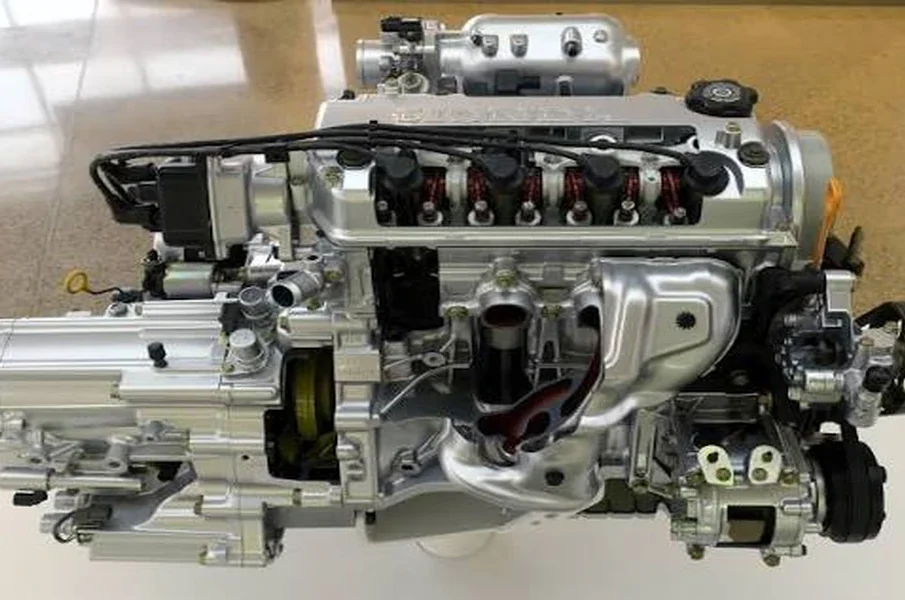
Ask a Honda enthusiast what engine is in their car and you will not hear “a 2.0 liter four-cylinder.” You will hear “K20A2” or “B18C5” or “D16Y8,” rattled off like a phone number. Those codes are not random. They are a compact language that tells you the engine family, the displacement, and often the exact variant. Once you can read them, the whole world of Honda swaps opens up, and choosing the right engine for a project stops feeling like a guessing game.
This is one of the reasons Hondas became the default platform for engine swaps. The codes are consistent, the families are well documented, and the parts interchange in ways that reward anyone willing to learn the system.
How to read a Honda engine code
Honda codes follow a logical structure. The first letter identifies the engine family. The two digits that follow indicate displacement, roughly in liters multiplied by ten, so a “20” is about two liters and a “16” is about 1.6. The letters and numbers after that specify the variant, including whether it has VTEC and which version.
Take B16A. The B is the family, the 16 means 1.6 liters, and the A denotes the specific spec. Take K24A. The K family, 2.4 liters, A variant. Once the pattern clicks, you can glance at a code and immediately know the rough size and lineage of the engine. When you browse a catalog of Honda JDM engines, those codes are how you tell a mild economy unit apart from a high-output performance variant at a glance.
The B-series: the swap that built a community
The B-series is the engine that made Honda swaps famous. Built primarily through the 1990s, these 1.6 to 1.8 liter four-cylinders combined VTEC, high-revving character, and serious tuning potential in a compact package. The B16 and B18 variants found their way into countless Civics and Integras, both from the factory and through swaps.
The crown jewel is the B18C5, the engine from the Integra Type R, prized for its output and rev range. B-series engines respond beautifully to modification and slot into a huge range of chassis with established swap kits. For a classic Honda build, the B-series remains the sentimental and practical favorite.
The D-series: the underrated workhorse
The D-series is the engine most Honda owners actually started with, even if they did not brag about it. These were the economy-minded units in base Civics and similar models, ranging from non-VTEC to the VTEC-equipped D16 variants. For years they were dismissed as the boring option.
That reputation undersells them. D-series engines are cheap, plentiful, light, and surprisingly tunable. A well-built D-series can be a genuinely fun street engine, and the low cost of entry makes it a smart choice for a first build or a budget-conscious daily. Do not overlook them just because they lack the badge cachet of a Type R unit.
The K-series: the modern standard
The K-series replaced the B-series and raised the ceiling considerably. These 2.0 and 2.4 liter engines brought i-VTEC, more displacement, and a stronger bottom end. The K20 and K24 power everything from the RSX and newer Civic Si models to a vast swap ecosystem that has, for many builders, eclipsed the older B-series entirely.
The K-series makes more power more easily and tolerates boost well, which is why it dominates modern Honda performance builds. A K-swap into an older lightweight chassis is one of the most popular projects in the scene, blending classic Honda handling with contemporary power. If you are building today and want headroom, the K-series is usually the answer.
The H-series: the big-displacement option
The H-series often gets left out of the conversation, which is a shame. These larger engines, the 2.2 and 2.3 liter units found in Preludes and Accords, offer more displacement and torque than the B-series in a similarly tunable package. The H22 in particular has a devoted following among builders who want grunt without jumping to a K-series.
For someone after a different character, more low-end pull and a big-engine feel, the H-series is a compelling and somewhat under-the-radar choice.
Why Hondas swap so easily
The codes are only half the reason Hondas dominate the swap world. The other half is interchangeability. Honda used shared mounting points, common bellhousing patterns, and overlapping accessory designs across years and models, which means engines move between chassis with far less custom fabrication than most platforms require. A B-series can drop into a range of Civics and Integras. A K-series finds a home in an even wider spread of cars thanks to a mature ecosystem of mounts, axles, and wiring solutions developed by the community over decades.
That ecosystem matters as much as the hardware. Because so many people have done these swaps, the knowledge is documented, the parts are off the shelf, and the problems are solved. A first-time builder is not blazing a trail. They are following a well-worn path with guides, forums, and kit suppliers at every step. When you pair that support network with the steady supply of low-mileage imported units, the barrier to a successful Honda swap is lower than on almost any other make.
Reading the variant suffix
Once you can identify the family, the suffix is where the real detail lives. Two engines can both be K20A units yet differ in compression, cams, and output depending on the exact spec and the market they were built for. The high-output variants, the ones from the performance models, command more because they make more power in stock form. The milder variants are cheaper and perfectly good for a street build. Learning to read past the family letter into the specific variant code is what separates a buyer who knows exactly what they are getting from one hoping the badge tells the whole story.
Choosing the right engine for your build
With the families decoded, picking comes down to your goals, your chassis, and your budget. A first build on a tight budget points toward a D-series or an early B-series. A classic Honda where you want spirited, naturally aspirated character favors a B-series, ideally a high-spec VTEC variant. A modern high-power build, especially one headed for boost, calls for a K-series. A torque-focused street car might be happiest with an H22.
Whatever you choose, the import market makes it accessible. JDM-sourced Honda engines arrive with the low mileage that Japan’s vehicle replacement cycle produces, and the consistent code system means you know exactly what you are getting. Match the engine family to your project, confirm the variant by its code, and you have the foundation for a build that has kept Honda fans busy for thirty years and counting.
